
Teaching Secondary Targeting in Protection Dog Training | Raise & Train Prim
Protection dog training is about much more than teaching a dog to bite. It's about teaching the dog to solve problems, adapt to changing situations, and remain committed to the task in front of them.
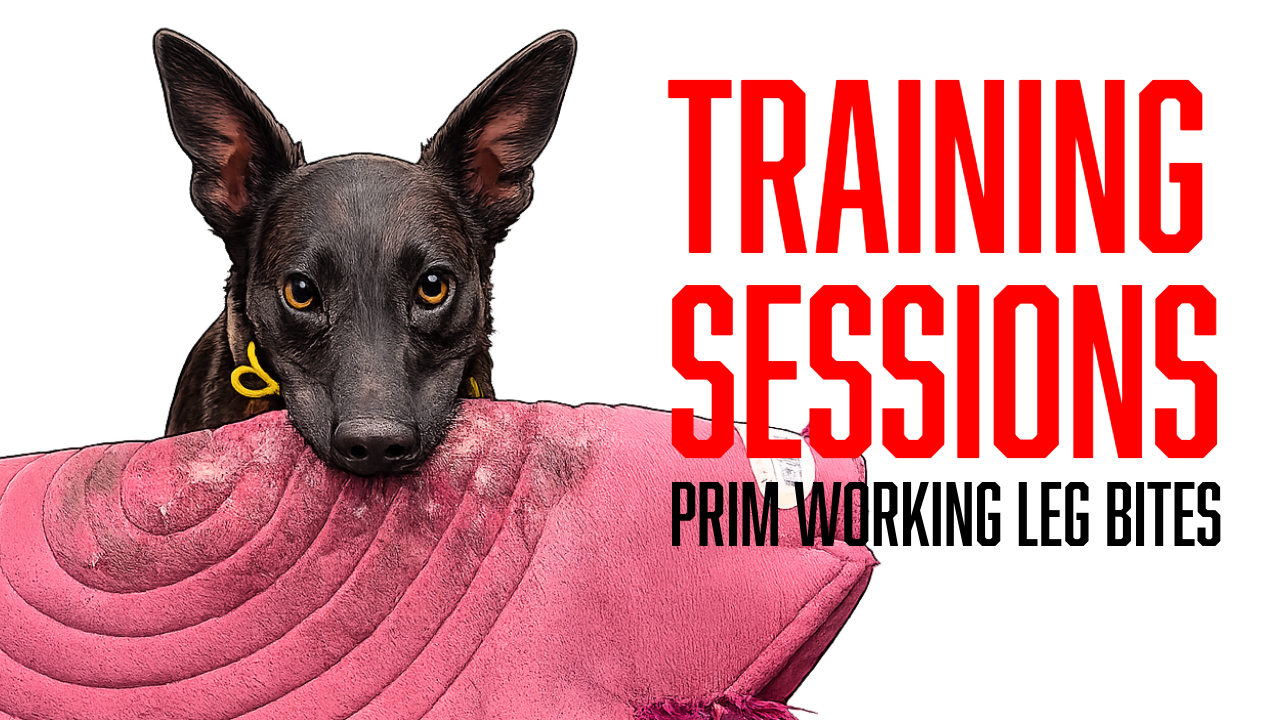
In this Raise & Train session, Prim begins working on an important skill known as secondary targeting.
Prim has primarily been trained to engage upper-body targets. As her training progresses, it's important that she also understands what to do when that primary target isn't available. That's exactly what this session is designed to teach.
What Is Secondary Targeting?
Secondary targeting teaches a protection dog to confidently engage an alternate target when its preferred target isn't available.
Dogs naturally develop preferences based on their training history. If every repetition has been presented the same way, many dogs will continue searching for that familiar target even when another opportunity is available.
By intentionally introducing alternate targets during training, we teach the dog to adapt instead of hesitating.
The objective isn't to create uncertainty. It's to build confidence and problem-solving skills while maintaining clear communication.
The "Alligator Rule"
One concept we like to use when explaining this exercise is what we call the "alligator rule."
Whatever is in front of you, bite it.
The idea is simple. Rather than teaching the dog to fixate on one exact location, we teach them to confidently engage the available target with commitment and intensity.
This creates a dog that spends less time searching and more time responding appropriately to the opportunity presented.
The "alligator rule" isn't about randomness. It's about developing a dog that understands the overall objective while remaining adaptable.
Introducing a New Picture
Although Prim worked lower-body targets as a very young puppy, this was her first session revisiting leg targeting after spending so much time developing upper-body work.
Whenever we introduce a new picture, clarity becomes the priority.
We present the exercise in a controlled environment, reward successful decisions, and allow the dog to gain confidence before increasing complexity.
By progressing gradually, the dog learns the new concept without creating unnecessary conflict or confusion.
Building a More Complete Protection Dog
Protection dogs should be prepared to work through changing situations.
Training only one picture can limit the dog's ability to respond confidently when circumstances change. Secondary targeting helps develop flexibility while reinforcing commitment, grip quality, and problem-solving.
As the dog's experience grows, these concepts become part of a larger training system that emphasizes clear communication, strong fundamentals, and consistent performance.
Prim's Progress
Prim handled her first session back on lower-body targets exceptionally well.
She approached the exercise with confidence, adapted quickly to the new picture, and showed the same enthusiasm and commitment that she brings to every training session. Watching dogs successfully work through new challenges is one of the most rewarding parts of the Raise & Train process.
As Prim continues her customized program, we'll keep building on these foundations by introducing new scenarios, strengthening existing skills, and preparing her for a wide range of training situations.
Follow along as we continue documenting Prim's Raise &Train journey and sharing the methods we use to develop confident, capable personal protection and working dogs.
If you're interested in professional protection dog training, personal protection dogs, advanced obedience, behavior modification, or our Raise & Train program, we'd love to help.
Visit www.primalcanine.com