
How to Stop Dog Reactivity on Walks (BASIC Step-by-Step Guide)
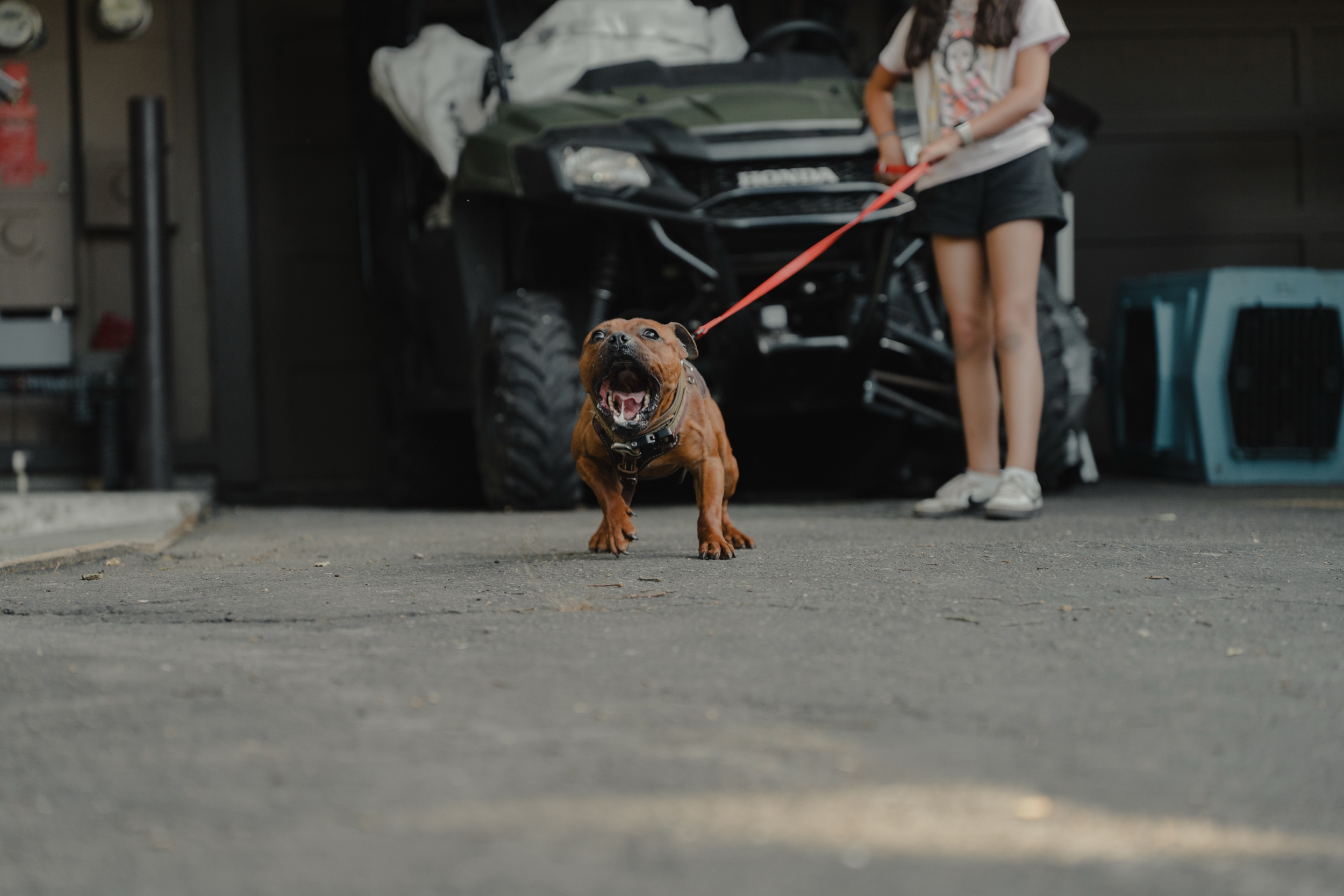
Dog reactivity on walks is one of the most common issues we see.
Before we get into anything, this needs to be said first:
If you’re serious about fixing reactivity, you should consult with a professional dog trainer.
A trainer can:
Identify your dog’s specific stressors
Read behavior before the reaction happens
Evaluate how you and your dog communicate
Build a plan tailored to both of you
👉 If you need help with your dog’s reactivity, apply for training at www.primalcanine.com and we’ll guide you through it step by step.
What Causes Dog Reactivity?
One of the biggest mistakes people make is focusing only on the reaction instead of the cause.
From what we see daily, most reactive dogs fall into a few categories:
1. Poor Communication
This is the biggest one.
Repeating commands like “leave it” with no follow-through
Saying “it’s ok” while the dog is escalating
Pulling on the leash while talking
All of this creates confusion.
In some cases, you’re actually pairing your words with the reactive behavior, which can make it worse.
2. Lack of Engagement
If your dog is more focused on everything else than you, you’ve already lost the moment.
Reactivity often starts because:
Your dog isn’t checking in with you
There’s no structure on walks
The environment has more value than you do
3. Excitement-Based Reactivity
This is very common.
Usually caused by:
Dog parks
Free play daycares
Letting your dog greet every dog
Your dog learns:
“Dog = I get to go interact”
So when they can’t… they react.
4. Fear-Based Reactivity
This can come from:
Bad experiences with other dogs
Lack of proper exposure
No structured introduction to environments
5. True Aggression (Rare)
Actual genetic aggression exists, but it’s far less common than people think.
Don’t Get Stuck on the “Why”
The root cause matters.
But what matters more is what you do next.
Dogs don’t hold onto experiences the same way humans do.
If you keep telling yourself “they’ve been through a lot” without addressing the behavior, it becomes a crutch.
👉 Focus on building new patterns, not excusing old ones.
Step 1: Start in a Controlled Environment
Do not jump straight into a walk and expect success.
Start inside your home.
Work on:
Basic obedience
Leash handling
Engagement
Build Engagement First
A simple starting point:
Reward your dog every time they look at you
Mark it with “yes” or “good”
Turn it into a command like “focus”
This becomes your tool later on walks.
You can also reinforce:
Sit
Down
Heel positioning
👉 The goal is simple: your dog choosing you over everything else
Step 2: Prepare Before the Walk
Before you even step outside, make sure you have:
A clear reward system (food, toys, etc.)
A structured way to communicate (markers like “yes” or “good”)
The right training tools (slip, prong, etc. based on your dog)
👉 This is where working with a professional trainer matters most. The wrong tool or poor timing can set you back.
Step 3: Apply It on the Walk
Now let’s put it together.
Scenario 1: You Catch It Early (Best Case)
You see a dog before yours does
You give your focus command
Your dog engages with you
You reward immediately
👉 This is how you prevent the reaction entirely.
Scenario 2: Your Dog Is Already Locked In
Your dog is staring or fixating
You attempt engagement
They don’t respond
At this point:
You issue a correction (appropriate to your dog)
You keep moving
Do NOT:
Stand still
Pull endlessly on the leash
Let your dog sit in that overstimulated state
Afterward:
Re-engage your dog
Run simple obedience
Bring them back mentally
👉 The goal is to interrupt, move, and reset
The Biggest Mistake on Walks
Standing still and letting your dog:
Bark
Lunge
Pull
While you:
Repeat commands
Pull on the leash
Try to “talk them through it”
That doesn’t fix anything.
It builds the behavior.
Start Small, Build Up
Once your dog is solid:
In the house
In low-distraction environments
Then you gradually increase:
Distance to other dogs
Level of distraction
Complexity of the environment
👉 This is a progression, not a jump.
Want to See This in Action?
We break this down in real training sessions on our YouTube channel.
👉 Check out our Training Sessions playlist to see how we work dogs through reactivity step-by-step.
Need Help With Your Dog’s Reactivity?
Reactivity can be frustrating, but it’s something we deal with every day.
Whether it’s excitement, fear, or more serious behavior, we’ll build a plan that works for you and your dog.
👉 Apply for training at www.primalcanine.com
👉 Or schedule a consultation to get started
Spots are limited and programs fill quickly.
Next Step
If this helped, your next read should be:
👉 Board and Train vs Private Lessons
This will help you decide the best path forward for your dog.